

In short
If you are selling, remortgaging or taking equity release, removal is usually the practical answer: the House of Commons Library reports that in 2024 a quarter of the biggest mortgage lenders and every equity release lender surveyed would not lend on a house with spray foam in the roof. If you are staying put and the timbers are dry, you can leave it and have it inspected. We strip it back to bare rafters by hand.
This is a job for our Spray Foam Removal service.
Why spray foam became a problem
The foam itself is not the issue; what it hides is. The Property Care Association explains that spray foam forms a thick, continuous layer that completely obscures the roof structure, and that a surveyor who cannot see the rafters and the underside of the tiles cannot say whether they are sound. The PCA also warns that foam can trap moisture against the timbers and restrict ventilation in the roof space, leading to condensation, timber decay and mould. The RICS consumer guide makes the same point: spray foam turns a cold roof into a warm one and seals in moisture unless precautions were taken.
Lenders have responded to that uncertainty by refusing. The House of Commons Library's briefing on spray foam and mortgages cites the BBC's November 2024 survey finding that a quarter of the UK's biggest mortgage providers and all of the equity release lenders it asked would not lend against homes with spray foam in the roof. The same briefing records the PCA and HomeOwners Alliance telling government in 2025 that 35% of the more than 500 properties they had inspected had at least one defect caused by the foam.
Remove it or leave it
| Your situation | What we would do |
|---|---|
| Selling, remortgaging or equity release in the next couple of years | Remove it. A refused mortgage costs more than the removal, and you cannot argue with a lender's policy. |
| Staying put, foam installed recently with paperwork | Keep the installation contract, guarantee and any BBA or Kiwa certificate, which RICS says surveyors will ask for, and have the timbers inspected. |
| Staying put, no paperwork, or signs of damp in the loft | Inspect first. If the timber is wet or the foam is closed-cell against an old underlay, remove it before the rafters suffer. |
| Listed building | RICS notes it should not have been applied without consent; take advice from the conservation officer before anyone touches it. |
What removal involves
- We survey the loft first: foam type, depth, what it is stuck to, and any damp staining on the timbers.
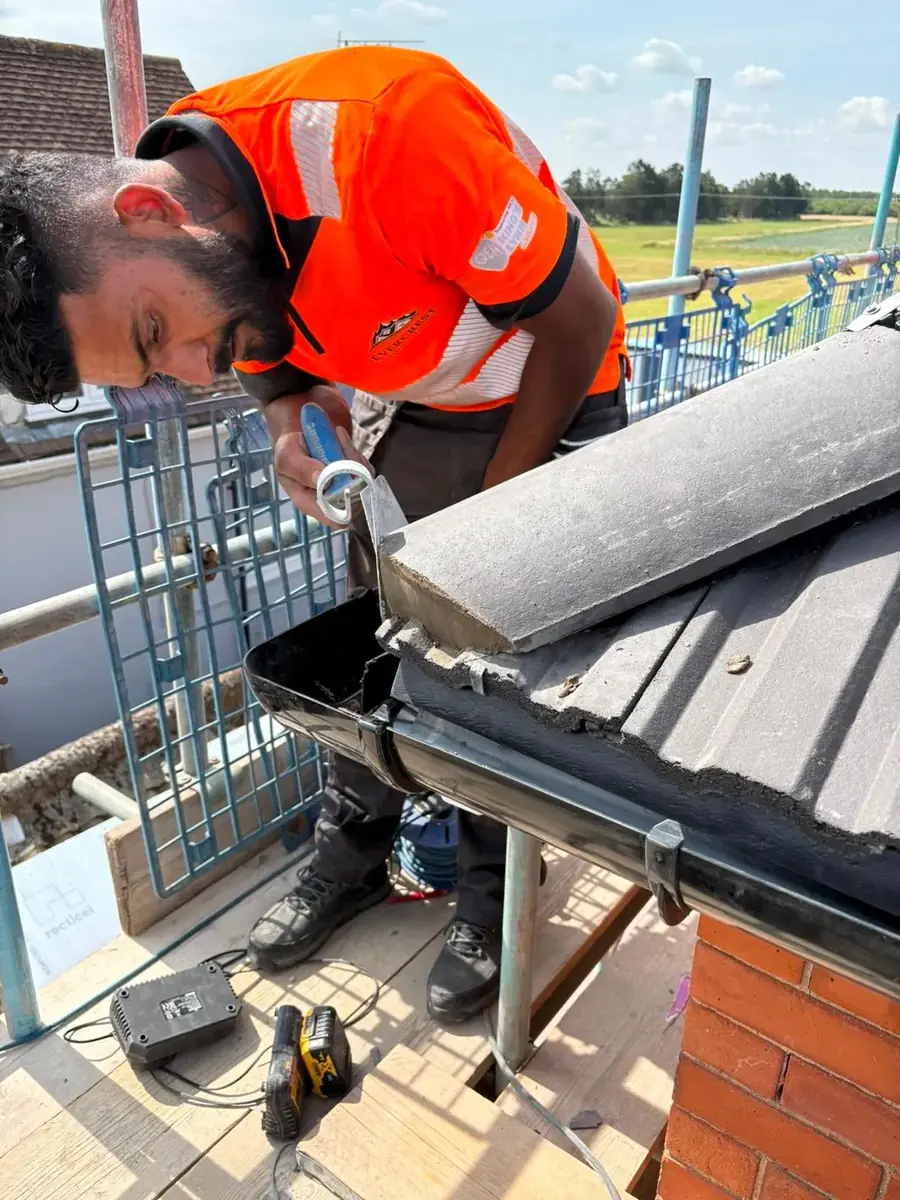
- The foam is cut and scraped off the rafters and the underside of the tiles or underlay by hand, in respirators, and bagged as it comes down. The photograph on our spray foam page is one of our team doing exactly that.
- Any underlay the foam has taken with it is noted. On an older bitumen felt the foam often will not separate cleanly, and we tell you before we start what that means for the roof.
- The rafters are brushed back to clean timber and we photograph every bay so you have a record for the surveyor.
- We put the roof's ventilation back and, if you want the loft insulated, lay mineral wool at ceiling level, which the RICS guide notes is cheaper, easier to maintain and keeps the roof space inspectable.
What we will not claim
We do not promise that removal alone will satisfy a particular lender: that is their surveyor's call, and the photographs and the clean rafters are what give them something to pass. The Commons Library briefing quotes Checkatrade's estimate of around £3,200, or £40 per square metre, for a three-bedroom detached house; ours depends on the foam type, the depth and the state of the underlay, and we quote after we have seen it.